What Does Mental Health Mean for Western Railways?
- Home
- Blogs
When we hear the words mental health, many people still associate them with words like “unstable” or “mad.”
These misconceptions continue to shape how society views emotional wellbeing. Among younger generations, the conversation has evolved, with mental health often being equated to living a stress-free life. But at its core, mental health is about how we think, feel, cope, and function every day.
For the thousands of people who keep Mumbai moving, from police personnel to railway staff, mental wellbeing is not just a personal matter. It is directly linked to public safety, decision-making, and the ability to perform under immense pressure.
What is Manaswin?
Manaswin, “Banega Mentally Fit Mumbai”, is Project Mumbai’s mental health initiative for uniformed and public service personnel. Launched in 2022, the programme follows Project Mumbai’s Public-Private-People Partnership (PPPP) model and provides practical mental health awareness and emotional resilience training for frontline workers.
Over the last four years, Manaswin has reached more than 2,500 personnel across Mumbai’s public service ecosystem, including Mumbai Police, Traffic Police, prison staff, RTO Wadala, and personnel from both Central and Western Railways.
The philosophy behind the initiative is that the people who spend their lives protecting and serving others deserve support for their own mental wellbeing too.
Taking Mental Health to Western Railways
Recently, Project Mumbai’s Mental Health Team conducted a 15-day Manaswin programme for 635 Western Railway personnel across multiple departments, including the Railway Protection Force (RPF), Operations, Commercial, Station Masters, and other frontline teams.
Every session lasted approximately two hours and was conducted in smaller groups, allowing participants to openly engage, ask questions, and receive individual attention.
Each workshop followed a highly interactive format:
- Welcome and Introduction: Understanding what mental health really means, discussing stress, setting expectations, and creating a safe, confidential environment where every conversation stayed within the room.
- Understanding Mental Health: Helping participants distinguish between everyday stress, mental health challenges, and mental illnesses. The sessions also highlighted that an important indicator of someone’s emotional state remains significantly different from their normal for more than two weeks; it may be time to seek support.
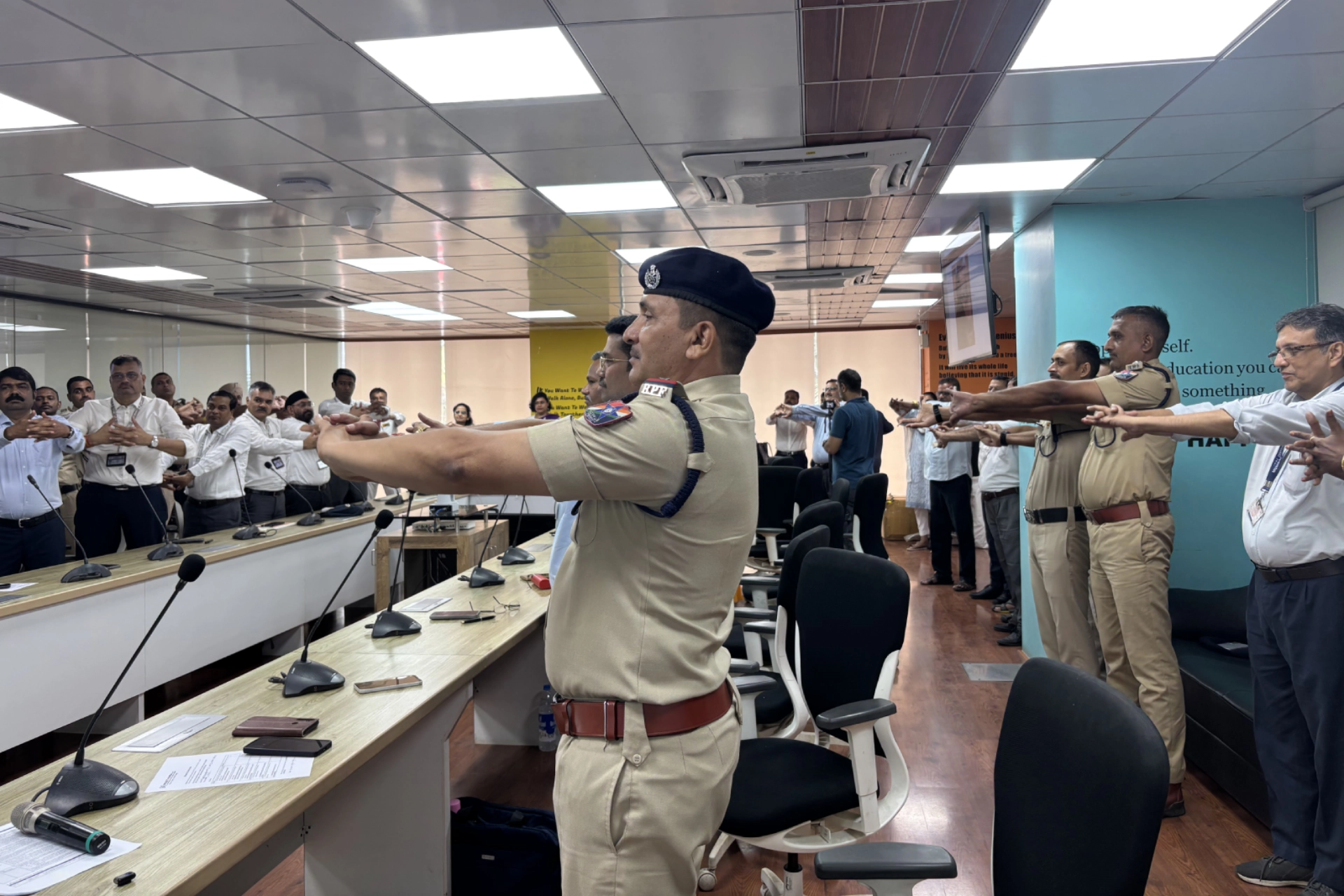
- Movement Breaks: One of the most unexpected and enjoyed parts of every session is the movement breaks. Participants were encouraged to stand up, stretch, dance, laugh, and simply move. Physical movement acts as a powerful reset for the brain, helping reduce stress, improve focus, and recharge energy during demanding workdays.

- Guided Meditation: Practical breathing exercises and mindfulness techniques that could easily be practised during work shifts without requiring additional resources.
- Gratitude Activity: Participants reflected on colleagues who had supported them or acknowledged their own strengths. In professions where appreciation is often rare but responsibilities are immense, this simple activity created powerful moments of connection.
Breaking the Stigma Around Mental Health
One of the most striking observations during the programme was how differently various generations approached mental health. Many senior personnel initially insisted that they did not experience stress. However, as facilitators explained anxiety, burnout, emotional fatigue, and prolonged mental health challenges using everyday workplace examples, many participants recognised these experiences in themselves.
The sessions were not about diagnosing people or encouraging therapy for everyone. They were about helping individuals identify emotions, understand when stress becomes overwhelming, and realise that seeking support is not a sign of weakness.
By the end of the programme, conversations had shifted from hesitation to openness, with many participants sharing experiences they had never previously discussed.
A Special Session for the Frontline Leaders
One of the highlights of the programme was a dedicated session for Western Railway’s senior leadership and frontline officers, including Divisional Railway Manager (Mumbai Central) Pankaj Singh, and several other senior officers. These officers shoulder a unique responsibility. Beyond managing large railway operations, they are responsible for building healthy workplaces, supporting their teams through crises, and maintaining morale during challenging situations.
In the middle of a mental health workshop, the room suddenly transformed into a space filled with music, laughter, and movement. The officers participated in a lively dance and movement activity, an experience that surprised many of them. It became one of the most memorable moments of the day.
Movement provides the brain with a much-needed pause, releases tension, improves mood, and reminds us that sometimes the quickest way to recharge is simply to move. Even a few minutes of stretching, walking, or dancing can help reset the mind before returning to demanding responsibilities. The smiles across the room were an indicator that mental wellbeing does not always begin with serious conversations. Sometimes, it begins with permitting ourselves to pause.
Building a Mentally Resilient Workforce
Mental health awareness should not be optional for organisations that operate around the clock. For institutions like Western Railways, where every decision can affect thousands of commuters every day, emotionally resilient teams are just as important as technically skilled ones.
Through initiatives like Manaswin, Project Mumbai continues to create safe spaces where frontline workers can learn practical tools to manage stress, support one another, and build healthier workplaces. Because when we care for the wellbeing of those who keep our city running, we strengthen the resilience of Mumbai itself.