Email Address

info@projectmumbai.org

Phone Number

+91 - 9653330712

Our Location

Mumbai

How a Plastic Bottle Becomes a Public Bench

Do you know how long a single-use plastic bottle stays in the environment?

The plastic bottle you throw away today may outlive you, your children, and even your great-grandchildren.

A single-use plastic bottle can take anywhere between 450 and 1,000 years to break down in the environment. Yet, for most of us, it serves its purpose for only a few minutes, a quick drink during a commute, a workout, or a meeting, and then it is discarded without a second thought. Every minute, around one million plastic bottles are purchased worldwide. By the time you finish reading this article, millions more will have entered the waste stream.

But what happens after we throw plastic away?

The Plastic Paradox
Ironically, plastic was never created to harm the planet. The first commercially successful plastics were celebrated as an innovation that could reduce dependence on scarce natural resources. They were durable, lightweight, inexpensive and versatile. In many ways, plastic was designed to make life easier and even reduce the demand for materials like ivory, wood and metal. And the very quality that made plastic durable turned into one of the greatest environmental challenges. Plastic breaks down into smaller fragments, releasing chemicals and creating microplastics that remain in our soil, rivers and oceans for decades, even centuries. These microscopic particles have now been found in marine life, drinking water, agricultural land and even the human body.

Plastic Challenges Our Habits

According to global estimates, only around 9% of all plastic ever produced has been recycled (Shun Poly). The rest has ended up in landfills or entered the rivers, oceans and natural environment.
Much of this happens because waste is never properly segregated at the source. A recyclable plastic bottle contaminated with food waste often becomes impossible to recycle economically. Different categories of plastic require different recycling processes, and once mixed, recovering them becomes significantly more complex.
Think of it this way. Mixing every type of plastic into one bag and expecting it to be recycled efficiently is like pouring orange juice, coffee, milk and cola into one glass and calling it a single beverage. Once mixed, separating them again is expensive, time-consuming and often impossible.
Segregation is the first and most important step in recycling.

A Challenge Starts At Home

India generates millions of tonnes of plastic waste every year, and while awareness around recycling has increased, effective waste segregation remains one of the country’s biggest environmental challenges. Recognising the growing need, the Government of India strengthened waste management practices through updated four-way waste segregation guidelines, encouraging households and institutions to separate waste streams more effectively.
Implementation becomes a big challenge, where even in metropolitan cities such as Mumbai and Delhi, a significant proportion of waste continues to reach collection points without proper segregation.
Material that can be recycled often ends up in landfills, leading to environmental pollution instead. The challenge is therefore ensuring that the waste we generate is managed responsibly.

Giving Plastic a Second Life

At Project Mumbai, we believe that waste should not become a burden on the environment. That belief gave birth to The Project Mumbai Plastic Recyclothon, a citizen-driven initiative built on a simple objective is to prevent recyclable plastic from reaching landfills and water bodies by transforming it into useful public infrastructure.

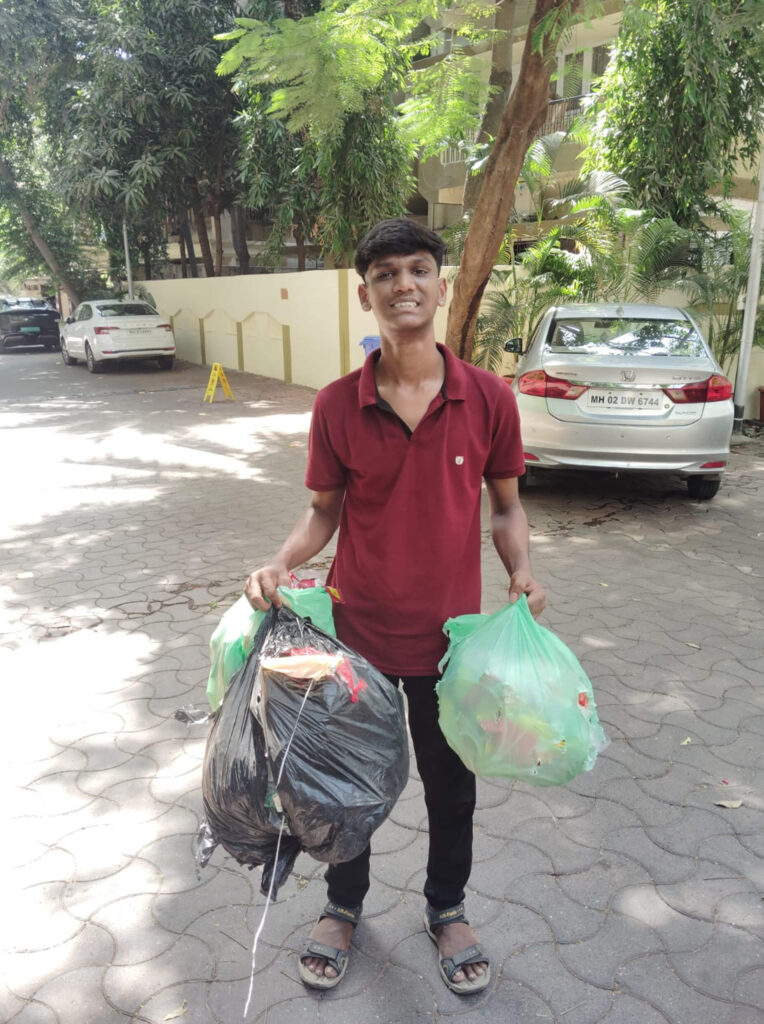
The journey is long and begins with citizens such as residents, schools, housing societies, offices and institutions donating their segregated plastic waste through collection drives organised across Mumbai.
Different categories of plastic are carefully sorted according to their composition. Each type undergoes its own recycling process before being processed into raw material that can be moulded into entirely new products.
What was once considered waste is transformed into something valuable.

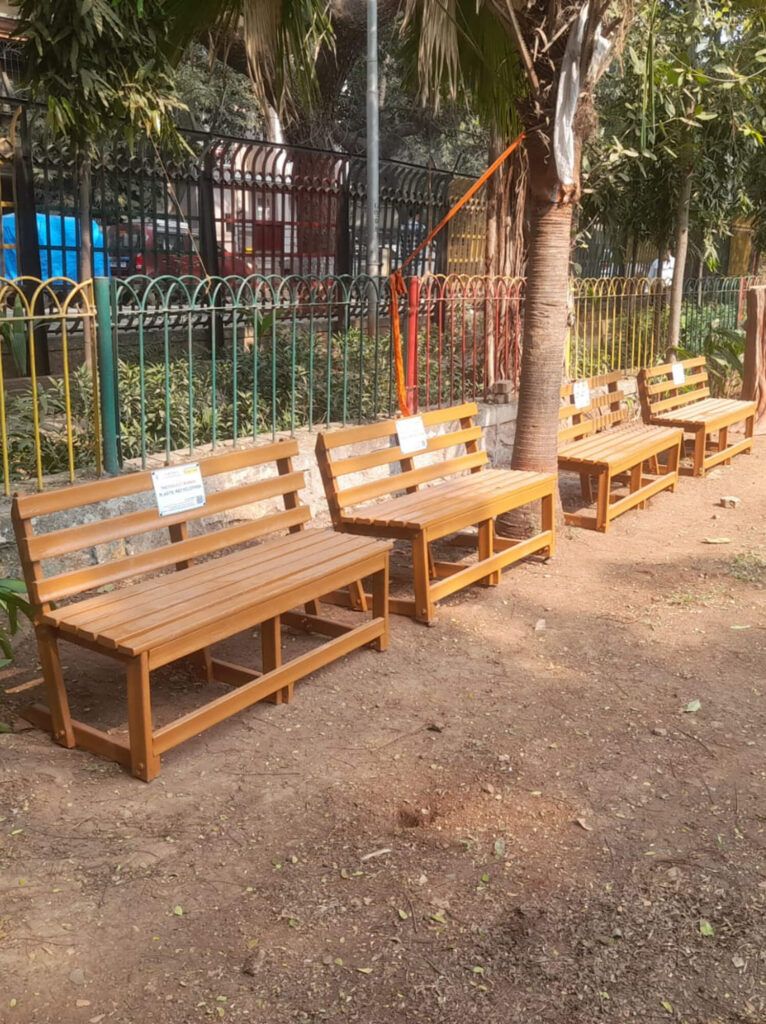
Plastic bottles become public benches.

Discarded packaging becomes dustbins.

Used plastic finds new life as planters, stationery, T-shirts and other everyday products.

These recycled products now serve communities across Mumbai in public gardens, schools and community spaces, proving that waste can become a resource when managed responsibly.

Recycling Begins at Home

One of the biggest misconceptions about recycling is that it begins at recycling plants.
It begins in our kitchens. It begins with a household deciding to separate dry waste from wet waste. Washing and storing recyclable plastic separately instead of throwing everything into one dustbin and recognising that every individual’s actions influence the efficiency of an entire waste management system.
No technology, no recycling facility and no environmental organisation can recover valuable materials if waste reaches them mixed and contaminated.
Segregation is one of the simplest environmental actions any individual can take, yet its impact is among the most significant.

A Collective Responsibility

Environmental sustainability cannot be achieved without the help of governments, organisations, or citizens. The success of initiatives like the Plastic Recyclothon has never been measured only by the number of kilograms collected. It is measured by the number of people who choose to participate. Every individual who chooses to donate plastic instead of discarding it carelessly.
Together, these small actions prevent tonnes of recyclable material from entering landfills and natural ecosystems. And while one plastic bottle may seem insignificant, millions of bottles make up the environmental crisis we see today.
Likewise, one person’s action may seem small, but millions of responsible actions can reshape the future of our cities.

From Waste to Possibility

At Project Mumbai, our vision has always been to build a cleaner, safer and kinder city, which extends beyond cleaning beaches or organising recycling drives. It is about creating systems where citizens become active participants in environmental initiatives.

Every bench created through recycled plastic represents more than circular economy principles. It represents a citizen who chose to segregate waste and organised a collection drive.
A child who now sits on that bench in a public garden without ever knowing the journey it has taken.
The next time you hold a plastic bottle in your hand, remember it will spend centuries polluting our environment, or could it become the bench where someone reads a book, rests after a walk, or shares a conversation?
Join Project Mumbai’s Plastic Recyclothon and help give plastic a second life, one bottle, one bench and one responsible action at a time. And think-
Skip to content